About
Built by a clinician, for clinicians.
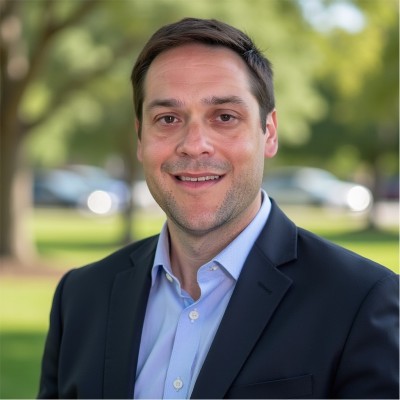
Michael Olszewski
PharmD, BCPS, BCCCP
Clinical Pharmacist Specialist
Clinical AI & DevOps Engineer
Charlotte, NC
AWS Certified Solutions Architect – Associate (SAA-C03)In progress
Built by a clinician
Built from inside the systems clinicians use every shift.
LocumView was designed by Michael Olszewski, a dual board-certified clinical pharmacist with two decades in critical care and infectious disease pharmacy, and a Clinical AI & DevOps Engineer. For eight years he chaired the Antimicrobial Stewardship Committee at a community hospital in North Carolina and led its designation as an IDSA Antimicrobial Stewardship Center of Excellence.
It's built from inside the fragmented systems clinicians use every shift: the extra logins, the copied numbers, the alerts that arrive too late or too often.
Years inside fragmented clinical systems showed him how regulated environments behave under pressure: where data breaks, where compliance slows people down, and what clinicians will actually adopt. Alongside his practice, he has been building the layer that fixes that.
His focus is agent-native clinical workspaces for regulated healthcare. The EHR becomes a governed data source over FHIR. Above it sits one unified environment: a hardened Linux desktop with AI agents built into the operating layer, centralized dashboards, and workflows tailored to each type of clinician. Everything is designed to run inside the regulated boundary, so clinicians work in one place instead of a dozen tabs.
Linux has been part of his life since childhood. At ten he was writing BASIC, opening up computers to learn the hardware, and dialing into BBS services on a 286 running MS-DOS. Over the past year he has turned that into working platforms, built on a self-hosted cluster with local LLM inference on GPU, infrastructure as code, and no open inbound ports.
He designs end to end, from network boundary and identity to workload placement and the clinical workflow on top, and is working toward the AWS Certified Solutions Architect – Associate (SAA-C03) certification for cloud and hybrid deployments.
The code works because the clinical logic is sound.
Related clinical AI work
- AMS Intelligence(opens in a new tab)Antimicrobial stewardship decision support that runs entirely on local models. Powers resistance trend analysis, antibiotic utilization signal detection, guideline-grounded clinical Q&A, and automated stewardship reports, with confounding by indication explicitly modeled.FAERSNHSNWHONETATLASPubMedIDSA / ASHP guidelines
- PV AI Workbench(opens in a new tab)Pharmacovigilance signal detection and RAG-based regulatory Q&A, plus MedDRA coding, ICSR narrative drafting, and literature monitoring. All inference runs locally.Retrieval: 100% Precision@5, MRR 0.861Signal detectionRAGMedDRAICSR
- Homelab infrastructure(opens in a new tab)Infrastructure as code for the k3s cluster that runs these platforms: GPU scheduling, Traefik ingress, and GitLab CI/CD.k3sTraefikGitLab CI/CDGPU
Stack
- Python
- LangChain
- ChromaDB
- Podman
- Ansible
- Terraform
- Kubernetes (k3s)
- FHIR
Self-hosted infrastructure
- Workloads
- 40+ containerized workloads on a three-node k3s cluster
- Ingress
- Cloudflare Tunnel, no open inbound ports
- Intrusion detection
- CrowdSec
- DNS filtering
- AdGuard
- Inference
- Local LLMs on GPU
I design systems that clinicians can trust and engineers can maintain.
Vision
What we are building toward.
A clinical workspace where the right information arrives before it is needed, where every automated suggestion shows its evidence, and where IT can rebuild any environment exactly, on infrastructure they control.
We believe open, enterprise Linux is the right foundation for that: auditable, portable, and free of lock-in.
Clinician in control
Software drafts and flags. People decide.
Show the evidence
Every suggestion cites its data and its sources.
Build from code
If it cannot be rebuilt, it cannot be trusted.
Open foundations
Standards-based, portable, and not tied to one vendor.